


The Disease: Luke Syndrome
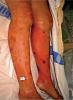
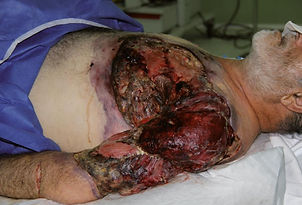
There can be obserable affects in any part of the body associated with known insect bite, especially the limbs, abdominal wall, neck and around the eyes.
It begins with slight redness and swelling with disproportionate pain and systemic upset (inflamatory response all over the body.)
There is a rapid progression of the disease and death usually follows by day 6, often before then.
After about 2 days from the disease onset, there is an increase of systemic inflammatory responses, followed by shock, and ultimately multiorgan failure. Patients often fall into a coma prior to death.
There is also progressive discoloration and darkenign of the tissue and subcutaneous hemorrhage accompanied by tachycardia (increase heart beat), hypotension (low blood pressure), acidosis (increase in acidity of the blood), fever, sometimes fall in body temperature.
Most people who exhibit this sort of disease are immno-compromised in some way. Almost always they exhibit symptoms of Luke Syndrome after having a chronic disorder or a recent trauma. Below is a table of pre-exsisting conditions which may lead to a greater sensitivity to this disease.
These potential redisposing factors are consistent with the patients. All patients were outdoors excessively and were thus exposed to numuerous insects. Every patient had a recent recorded insect bite. Two patients drank regularly (alcoholism),one had chronic joint pain, two exhibited continuing muscle pain, one had arthritis, and one had a chronic upper respiratory infection (immunocompromised). The chart below summarizes these observations and highlights reoccuring predispositions.
There appears to be a relationship between the disease and the condition of the patients' lungs, although this is inconsistent with necrotizing fasciitis. Three of the ten patients were regular smokers, another had asthma, and yet another had a chronic upper respiratory infection prior to exposure to this agent. This may make a person more suspectible to this disease although it is unclear whether suspeptibility is directly related to a weakened respiratory system or to a weakened immune system as a result of a weakened respiratory system.
Suseptibility
Symptoms
The Pathogen: Darth Vader (Escherichia father)
Disease Type
Luke Syndrome is very similar to Necrotizing Fasciitis, which is a deept-tissue infection.




The pathogen has been identified as a gram negative bacteria with an approximate genome size of 4.9Mb. The bacteria resembles a rod (bacilli) in structure and is motile. The pathogen was indicated to belong to the Escherichia genus by a bacterial key, which was then comfirmed by a bacterial latex agglutination (pictured below).

Based on the identification of the genus, it was concluded that the bacterium has a rapid growth rate, simple nutritional requirements, and participated in glucose fermentation with acid and gas. All of which are consistent with symptoms of the disease caused by the pathogen. (Discussed below).
A hydrogen sulfide test was then called to confirm this (pictured below). It came back describing a motile, indole-negative, and H2S-producing bacterium, suggesting a new species of the genus had been discovered.

Darth Vadar causes Luke Syndrome, often ending in amputation or death.
The new species was named Echerichia father, and it became more commonly known as Darth Vadar.
E. father affects humans by infecting their deep tissues, and using glucose fermentation until dermal necrosis has occurred. This is typified by an increase in acidity and an increase in oxidation of the tissues and the bodily fluids infected. Early identification is key, for this bacterium replicates rapidly.
Fig 2. The results of the hydrogen sulfide test.
Figure 2
Figure 1
The test results of the bacterial latex agglutination


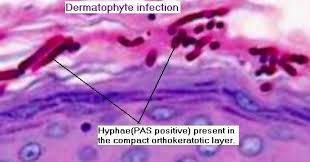
Figure 3 (to the left)
A visual of the approximate appearance of E. father.
Figure 4 (below)
A visual of a dermal infection by a Echerichia spp.